February 14, 2026
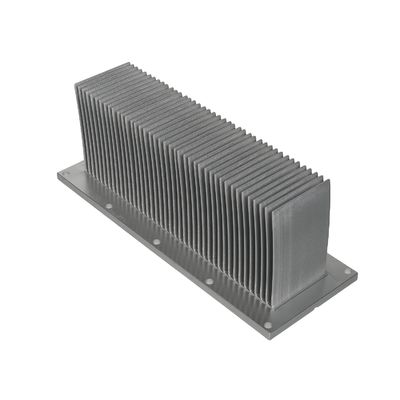
Many choose black anodizing for aluminum heat sinks to enhance their appearance or improve corrosion resistance. However, concerns often arise about whether this black oxide layer might compromise the primary function of heat dissipation. Today, we examine how black anodizing truly impacts thermal performance.
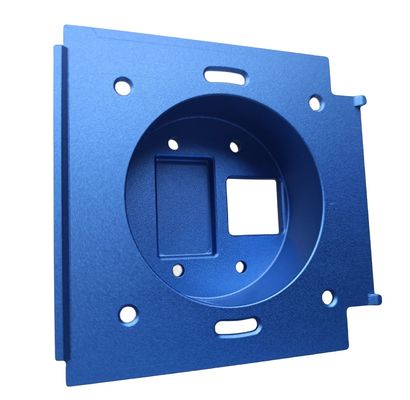
Anodizing is an electrochemical process that forms a dense aluminum oxide layer on the metal's surface. This coating offers exceptional hardness, wear resistance, and corrosion protection. Black anodizing specifically involves dyeing this oxide layer black during the process.
The effect on cooling performance involves two primary heat transfer methods:
Anodized aluminum oxide has significantly lower thermal conductivity than pure aluminum, meaning the oxide layer creates some resistance to heat transfer from the base material. Typical anodized layers measure between a few to several dozen microns thick. While aluminum oxide's lower conductivity might suggest reduced performance, the minimal thickness usually makes this effect negligible. However, excessively thick coatings can noticeably impair conduction.
The black oxide layer enhances thermal radiation - the emission of heat as electromagnetic waves. Dark surfaces generally exhibit higher emissivity, explaining why many heat sinks incorporate black coatings. This improved radiative capability often compensates for minor conduction losses.
For conduction-dominant designs with thin coatings, black anodizing might slightly reduce performance. Conversely, in radiation-dominant applications or with thicker coatings, it may improve overall cooling. The corrosion protection benefits also contribute to long-term reliability.
The choice ultimately depends on specific application requirements. Black anodizing presents neither universally positive nor negative effects on thermal performance, but rather requires careful evaluation of each use case's priorities.