logo

New Thermal Resistance Calculator Aids Electronic Cooling Efficiency

February 9, 2026

最新の会社ブログについて New Thermal Resistance Calculator Aids Electronic Cooling Efficiency

As electronic devices continue their relentless march toward higher performance and smaller form factors, thermal management has emerged as a critical design challenge. The increasing power density of modern electronics creates significant heat dissipation requirements that directly impact device reliability and performance.

The Critical Role of Thermal Design

Effective thermal management serves multiple essential functions in electronic devices:

  • Device Stability: Electronic components are highly temperature-sensitive. Excessive heat can degrade performance, shorten lifespan, or cause immediate failure.
  • Performance Enhancement: Many components operate more efficiently at lower temperatures. Processors, for example, can maintain higher clock speeds when properly cooled.
  • Longevity: Heat remains the primary factor in electronic component degradation. Proper thermal design significantly extends operational life.
  • Noise Reduction: Optimized cooling solutions allow for lower fan speeds, reducing acoustic emissions.
  • Energy Efficiency: Effective heat dissipation minimizes energy waste from thermal throttling and inefficient operation.
Fundamentals of Thermal Management

Understanding heat transfer mechanisms is essential for effective thermal design:

Heat Transfer Mechanisms
  • Conduction: Heat transfer through solid materials, dependent on thermal conductivity.
  • Convection: Heat transfer via fluid (air or liquid) movement, influenced by flow velocity and temperature differentials.
  • Radiation: Electromagnetic heat transfer, dependent on surface temperature and emissivity.
Key Thermal Parameters
  • Thermal Resistance (°C/W): Measures a material's resistance to heat flow.
  • TDP (Thermal Design Power): Maximum heat output a component generates under normal operation.
  • Junction Temperature (T junction ): The critical temperature at a chip's transistors.
  • Case Temperature (T case ): Measurable temperature at component packaging.
Thermal Budget: The Foundation of Cooling Design

The thermal budget defines the maximum allowable temperature rise for a system:

Thermal Budget = T case max (or T junction max ) - T ambient max

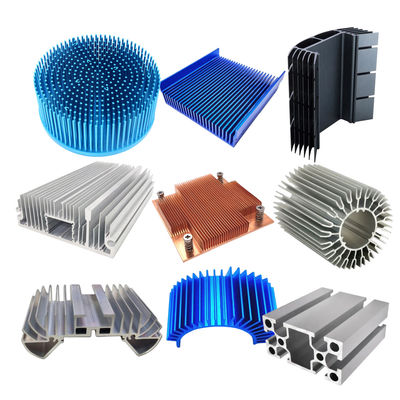
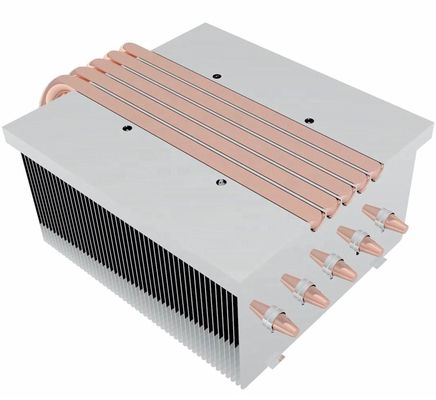
This calculation determines the cooling performance required to maintain safe operating temperatures under worst-case conditions. Applications with budgets exceeding 40°C typically use aluminum or copper heat sinks, while more constrained scenarios may require advanced solutions like vapor chambers.

Heat Sink Calculators: Precision Thermal Analysis

Modern thermal calculators enable engineers to evaluate cooling solutions with remarkable accuracy by analyzing multiple parameters:

Key Input Parameters
  • Heat Source Power: The component's TDP value
  • Source Dimensions: Physical size and placement on the heat sink base
  • Base Specifications: Heat sink base length and width
  • Fin Configuration: Height, thickness, spacing, and material
  • Thermal Interface Material: Selection of appropriate TIM
Performance Analysis

Advanced calculators provide detailed thermal performance data comparing solid metal bases versus vapor chamber solutions, including:

  • Fin temperature rise (ΔT fin )
  • TIM and base-to-fin thermal resistance (ΔT TIM + ΔT base-to-fin )
  • Base temperature rise (ΔT base )
Vapor Chamber Advantages
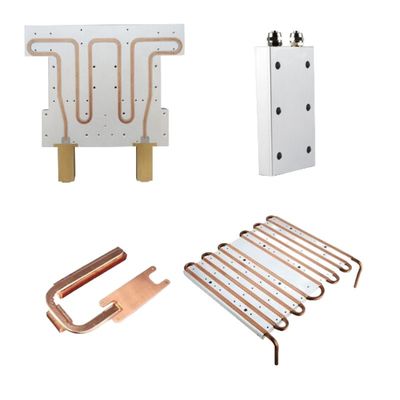
  • Superior Thermal Conductivity: Phase-change mechanisms enable heat transfer far exceeding solid metals
  • Uniform Temperature Distribution: Eliminates hot spots common in traditional heat sinks
  • Location Independence: Performance remains consistent regardless of heat source placement
Future Directions in Thermal Management
  • Microchannel Cooling: Ultra-high surface area solutions
  • Spray Cooling: Direct liquid contact for extreme heat fluxes
  • Phase Change Materials: Latent heat absorption capabilities
  • Thermoelectric Cooling: Solid-state temperature control
  • Liquid Cooling: High-efficiency circulating systems
Design Considerations
  • Airflow Management: Optimized fan selection and vent placement
  • Component Layout: Strategic heat source positioning
  • Environmental Factors: Accounting for operational conditions

As electronic components continue pushing performance boundaries, advanced thermal management tools and techniques will remain essential for reliable, efficient operation. Modern calculators provide engineers with the precision needed to navigate increasingly complex cooling requirements while balancing performance, cost, and form factor constraints.

私達と連絡を取ってください
コンタクトパーソン : Mr. Alfa zhang
電話番号 : 13763108722
残りの文字数(20/3000)