Stel je voor dat je computer intensieve games draait terwijl de interne temperaturen omhoog schieten.Warmteafzuigers zijn essentiële onderdelen die de stabiele werking van elektronische apparaten waarborgenDeze analyse onderzoekt hun werkingsprincipes, soorten, materiaalkeuze en toepassingen om efficiënte koelsystemen te bouwen.
De essentiële rol van warmtezuigers
Een warmteafvoer is een onderdeel gemaakt van thermisch geleidende materialen (meestal koper of aluminium) dat is ontworpen om warmte van elektronische of mechanische onderdelen te absorberen en af te leiden.Om de thermische weerstand te minimaliserenDe relatie tussen vleugelhoogte en afstand, bekend als de 'aspect ratio', is een belangrijke factor in de verwarming van de oppervlakte." is cruciaal in het ontwerp van een koelplaat..
Klassificatie naar koelmethode en ontwerp
Warmteputten kunnen worden ingedeeld op basis van koelmeganisme en fysieke configuratie, elk geschikt voor specifieke toepassingen en prestatievereisten.
Passieve versus actieve koeling
Deeltjes en delen daarvanwerken zonder ventilatoren of externe stroom, waarbij uitsluitend gebruik wordt gemaakt van natuurlijke convectie en thermische straling.Hun grotere grootte maakt ze ideaal voor apparaten met een laag vermogen of voor geluidsgevoelige omgevingen zoals ingebedde systemen, LED-verlichting en medische apparatuur.
Actieve warmtezuigerseen ventilator of pomp bevatten om de lucht/vloeistofcirculatie te dwingen, waardoor een superieure koeling voor CPU's en GPU's met een hoge prestatie wordt bereikt ten koste van extra energiebehoeften en potentieel lawaai.
Variaties in de configuratie van de vin
-
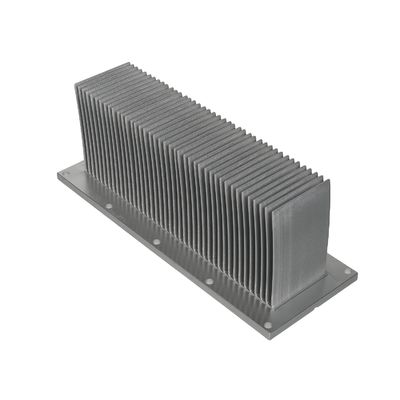
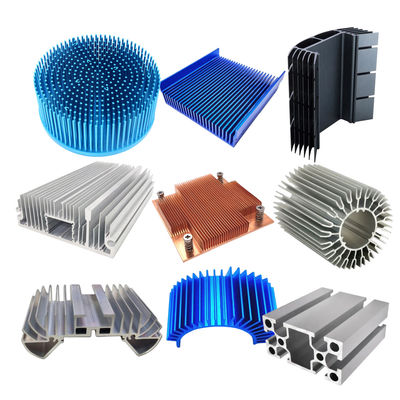
PlaatvinnenDe nieuwe technologieën zijn gebaseerd op de ontwikkeling van parallelle aluminiumplaten, eenvoudige en kosteneffectieve oplossingen voor matige koelbehoeften.
-
met een vermogen van niet meer dan 50 Wgebruik maken van dichte naaldvormige uitsteeksels voor maximale oppervlakte in ruimtebeperkte toepassingen.
-
met een breedte van niet meer dan 15 mmde turbulentie vergroten voor een betere efficiëntie van de luchtstroom.
-
met een breedte van niet meer dan 50 mmgespecialiseerde toepassingen waar traditionele vinnen onpraktisch zijn.
Strategieën voor prestatieoptimalisatie
Warmtezuigers voorkomen thermische versnelling en afbraak van componenten door optimale bedrijfstemperaturen te handhaven.
-
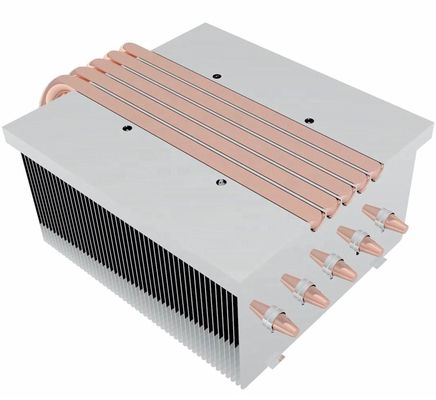
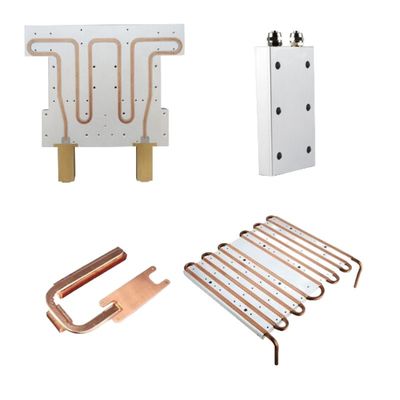
VerwarmingsbuizenDe thermische supersnelwegen worden gebruikt voor de snelle overdracht van warmte.
-
Thermische interface materialen(TIM's) overbruggen microscopische gaten tussen componenten, waardoor geleidende weerstand tot een minimum wordt beperkt.
Ingenieursoverwegingen
- Breedte-uitbreiding overtreft lengte-uitbreiding voor thermische prestaties
- De hoogte van de vin beïnvloedt zowel de koelcapaciteit als de efficiëntie van de thermische gradiënt
- De vinnendikte vereist een zorgvuldige optimalisatie tussen luchtstroom en geleidende overdracht
Gids voor materiaalkeuze
| Materiaal |
Warmtegeleidbaarheid |
Typische toepassingen |
| Aluminium |
205 W/m·K |
Consumentenelektronica, LED-systemen |
| met een gewicht van niet meer dan 10 kg |
401 W/m·K |
High-performance computing |
| Grafiet |
150-500 W/m·K |
Industriële toepassingen bij hoge temperaturen |
Thermodynamische principes
De warmteafvoer vindt plaats door middel van drie mechanismen:
-
Leiding:Directe warmteoverdracht door vaste materialen
-
Straling:Infrarood-energieemissies van oppervlakken
-
Convectie:Beweging van vloeistof (lucht/vloeistof) die warmte wegvoert
Productieprocessen
-
Extrusie:Kosteneffectieve massaproductie van standaardprofielen
-
Binding:Verbeterde thermische verbindingsprestaties
-
Skiving:Bewerkingen met een nauwkeurigheid van niet meer dan 50 W
-
koud smeden:Structuurintegriteit van hoge sterkte
Installatie en onderhoud
- Behoud van onbelemmerde luchtstroomroutes
- Zorg voor spoelcontact met warmtebronnen met behulp van TIM's van hoge kwaliteit
- Regelmatige reinigingscycli om stofophoping te voorkomen
- Bewaking van de effecten van de omgevingstemperatuur op het koelefficiënt
Applicatiespecifieke oplossingen
Compacte elektronica
Ruimtebeperkte apparaten vereisen innovatieve benaderingen zoals micro-fin-arrays of dampkamerintegratie.
Industriële apparatuur
In harde omgevingen zijn corrosiebestendige materialen en robuuste ontwerpen met beschermende coatings nodig.
Energiesystemen
De efficiëntie van zonnepanelen wordt verbeterd door een goed thermisch beheer, terwijl de componenten van windturbines profiteren van robuuste koeloplossingen.
Aangezien de elektronische energie-dichtheid blijft stijgen, blijven geavanceerde thermische oplossingen van cruciaal belang voor de betrouwbaarheid in alle technologische sectoren.

 Uw bericht moet tussen de 20-3.000 tekens bevatten!