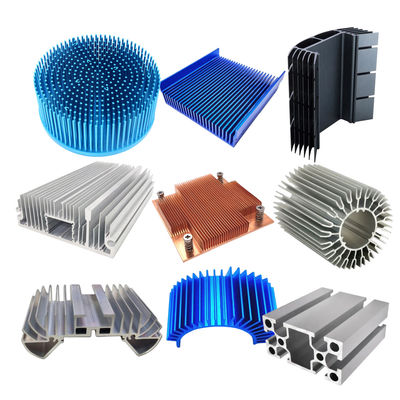
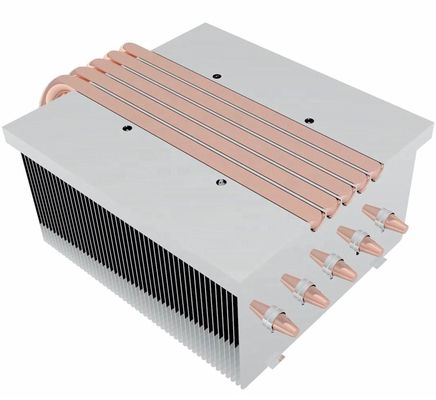
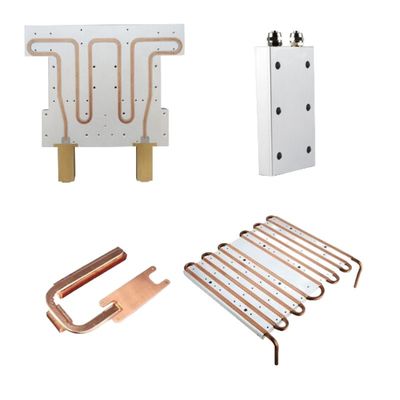
Imaginez que votre console de jeux bien-aimée gèle à un moment critique à cause d'une surchauffe, ou que votre serveur perd des données précieuses à cause d'un refroidissement inadéquat.Une gestion efficace de la chaleur est essentielle au bon fonctionnement des appareils électroniques.Le refroidissement actif et le refroidissement passif représentent deux approches fondamentales de la dissipation thermique, chacune présentant des avantages distincts.
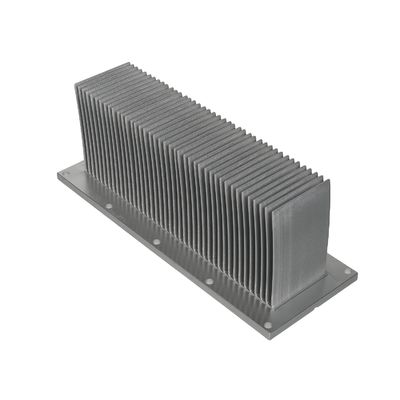
Les dissipateurs: les gardiens silencieux de l'électronique
Dans le domaine de l'électronique, les dissipateurs de chaleur servent de composants essentiels qui maintiennent des températures de fonctionnement stables pour les pièces électroniques.Leur fonction principale consiste à transférer et à disperser la chaleur des composants sensibles afin d'éviter une dégradation des performances ou des dommages permanents..
Fonctions essentielles des dissipateurs de chaleur
Les dissipateurs de chaleur fonctionnent grâce à trois mécanismes de transfert thermique principaux: conduction (transfert de chaleur à travers les solides), convection (transfert de chaleur à travers les fluides),et rayonnement (émission de chaleur électromagnétique)En combinant ces procédés, les dissipateurs de chaleur maintiennent les composants à des seuils de température sûrs.
Impact sur la longévité des appareils
La chaleur excessive représente l'une des menaces les plus importantes pour les composants électroniques, accélérant la dégradation des matériaux et réduisant la durée de vie.Une bonne gestion thermique grâce à des dissipateurs de chaleur efficaces réduit considérablement les taux de défaillance, en particulier dans les appareils à haute puissance ou les circuits intégrés densément regroupés.
Réchauffement actif: gestion thermique à haute performance
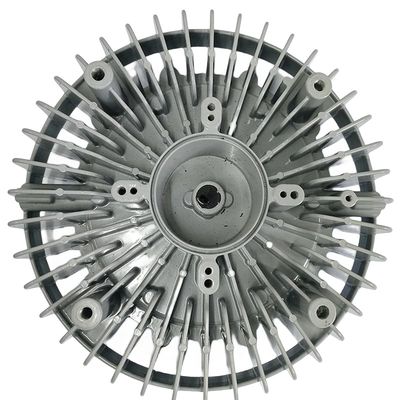
Les systèmes de refroidissement actifs utilisent des composants mécaniques tels que des ventilateurs ou des pompes de refroidissement liquide pour faire circuler de l'air ou du liquide de refroidissement de manière forcée.Cette méthode offre une dissipation de chaleur supérieure pour les applications à forte consommation d'énergie.
Les avantages et les applications
L'avantage principal du refroidissement actif réside dans sa capacité exceptionnelle de dissipation de chaleur, ce qui le rend idéal pour les systèmes informatiques hautes performances, y compris les PC de jeu, les serveurs de données,et électronique aérospatialeLe débit d'air forcé permet un fonctionnement stable sous lourdes charges de travail.
Les ingénieurs peuvent optimiser les configurations des ventilateurs ou les mises en page de refroidissement par liquide pour obtenir un refroidissement substantiel dans des facteurs de forme compacts.
Principes de sélection et de conception des matériaux
Le cuivre et l'aluminium dominent la construction de refroidisseurs actifs. Le cuivre offre une conductivité thermique supérieure mais augmente le poids et le coût, tandis que l'aluminium offre des rapports de poids/performance favorables.Beaucoup de refroidisseurs haut de gamme combinent une base en cuivre avec des ailerons en aluminium pour équilibrer les performances et l'économie.
Les facteurs tels que les dimensions du ventilateur, la vitesse de rotation, la géométrie de la lame, la disposition des nageoires,et les matériaux d'interface thermique contribuent tous à la performance globaleLes composés thermiques aident à minimiser les écarts d'air entre les composants et les dissipateurs de chaleur pour une conduction optimale.
Refroidissement passif: fonctionnement silencieux et écoénergétique
Le refroidissement passif repose entièrement sur la convection naturelle et le rayonnement thermique sans pièces mobiles.Cette approche élargit la surface pour faciliter la dissipation graduelle de la chaleur par le mouvement de l'air ambiant.
Avantages et mise en œuvre
L'absence de composants mécaniques rend les systèmes passifs complètement silencieux, adaptés aux environnements sensibles au bruit tels que les studios d'enregistrement, les établissements médicaux et les cinémas à domicile.Leur construction simple améliore leur fiabilité et leur durée de vie..
Les solutions passives démontrent également une efficacité énergétique en éliminant les besoins en énergie des ventilateurs ou des pompes de refroidissement.Cette caractéristique les rend préférables du point de vue de l'environnement pour les appareils à faible consommation, y compris les LED., systèmes informatiques de base et lecteurs multimédias.
Considérations matérielles et structurelles
L'aluminium reste le matériau prédominant pour les dissipateurs de chaleur passifs en raison de ses propriétés thermiques favorables et de son rentabilité.Certaines applications peuvent incorporer des alliages de cuivre ou d'aluminium pour des performances améliorées.
Les ingénieurs optimisent la géométrie, l'espacement et l'orientation des nageoires pour maximiser l'exposition de la surface à l'air ambiant.Le bon positionnement de l'installation assure un débit d'air sans entrave autour du dissipateur de chaleur.
Analyse comparative: refroidissement actif ou passif
| Caractéristique |
Refroidissement actif |
Refroidissement passif |
| Capacité de refroidissement |
Haut, adapté aux appareils à forte consommation d'énergie |
Modéré, adapté aux applications à faible puissance |
| Efficacité thermique |
Excellent taux de transfert de chaleur |
Dissipation de chaleur progressive |
| Sortie acoustique |
Bruit sonore du ventilateur |
Tout à fait silencieux. |
| La fiabilité |
Moins en raison de composants mécaniques |
Plus élevé avec construction à l'état solide |
| Consommation d'énergie |
Requiert une puissance supplémentaire |
Pas besoin d'énergie supplémentaire |
| Exigences en matière d'entretien |
Nettoyage régulier et remplacement du liquide de refroidissement |
Maintenance minimale |
| Coût de mise en œuvre |
Des coûts initiaux et opérationnels plus élevés |
Moins de dépenses globales |
Les orientations futures de la gestion thermique
À mesure que les appareils électroniques continuent d'évoluer vers une miniaturisation accrue et des performances plus élevées, les technologies de gestion thermique doivent progresser en conséquence.Les solutions émergentes visent à fournir desLes défis posés par le réchauffement climatique et la pollution atmosphérique sont les suivants:

 Votre message doit contenir entre 20 et 3 000 caractères!