In the realm of mechanical engineering, various components work in harmony to power the devices and systems we use daily. Among these, torsion springs stand out as seemingly modest yet fundamentally crucial elements. From garage doors to washing machines and automotive suspension systems, torsion springs play indispensable roles across numerous applications.
1. The Art of Torque and Resilience
Torsion springs are mechanical devices that store and release energy through twisting motion. When opposite twisting forces are applied to their ends, these springs generate torque, enabling control of rotational movement and pressure maintenance. Their performance depends on multiple factors including material composition, diameter, length, and coil count.
1.1 Working Principle: Energy Conversion Through Twisting
The operation of torsion springs relies on elastic deformation of materials. Under torsional stress, the spring's material undergoes twisting deformation to store energy. Upon force removal, the stored energy releases, returning the spring to its original state. This characteristic makes torsion springs effective for transmitting rotational force and maintaining pressure in angular displacement applications.
1.2 Mechanical Characteristics
Key mechanical properties include:
-
Torque:
The rotational force generated, proportional to the twist angle
-
Stiffness:
Resistance to twisting deformation
-
Elastic Limit:
Maximum twist angle before permanent deformation
-
Fatigue Life:
Number of twisting cycles before failure
2. Ubiquitous Applications
Torsion springs find extensive use across industries:
2.1 Automotive Industry
Applications include:
-
Suspension systems for stability and handling
-
Gear mechanisms for power transmission
-
Brake pedals and clutches for return force
2.2 Renewable Energy
Critical roles in:
-
Solar tracking systems for panel adjustment
-
Wind turbine blade angle optimization
-
Hydroelectric dam gate control
2.3 Construction Sector
Essential for:
-
Heavy equipment precision control
-
Door/window mechanisms for smooth operation
-
Scaffolding locking devices for safety
3. Materials and Design: Engineering Performance
Spring performance heavily depends on material selection and design configuration.
3.1 Material Selection
Common materials include:
|
Material
|
Key Properties
|
Applications
|
|
High-Carbon Steel
|
High strength, wear resistance
|
Heavy load applications
|
|
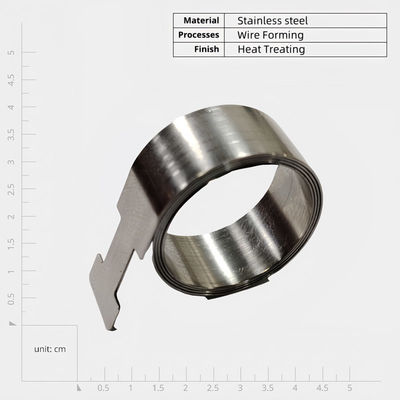
Stainless Steel
|
Corrosion resistance
|
Humid/corrosive environments
|
|
Chromium-Silicon Steel
|
Exceptional stress resistance
|
Extreme load conditions
|
3.2 Design Variants
Common configurations include:
-
Axial Torsion Springs:
Coils parallel to central axis for compact spaces
-
Double Torsion Springs:
Opposing coils for balanced force
-
Tangential Leg Designs:
Smooth torque application
4. Torsion vs. Extension Springs
Key differences:
|
Characteristic
|
Torsion Spring
|
Extension Spring
|
|
Force Type
|
Resists twisting
|
Resists stretching
|
|
Energy Storage
|
Twisting motion
|
Stretching motion
|
5. Selection Criteria
Key considerations include:
-
Mechanical purpose
-
Environmental conditions
-
Leg/hook configuration
-
Precision requirements
6. Advantages
Torsion springs offer:
-
High space efficiency
-
Long service life
-
Design flexibility
-
Precise torque control
7. Future Outlook
Emerging trends include:
-
Advanced materials for enhanced performance
-
Precision manufacturing techniques
-
Smart design methodologies
-
Miniaturization for micro-mechanical applications
8. Case Studies
8.1 Automotive Suspension Systems
Torsion springs work with shock absorbers to absorb road impacts, improving ride comfort.
8.2 Solar Tracking Systems
Enable precise panel orientation for optimal energy capture.
8.3 Washing Machines
Balance rotating drums to minimize vibration and noise.
9. Conclusion
Torsion springs serve as vital components across modern engineering applications. Through continuous material and design advancements, these mechanical elements will continue enabling innovative solutions across industries.

 Your message must be between 20-3,000 characters!