Have you ever noticed your smartphone getting uncomfortably warm during extended use or your laptop's fans spinning wildly during intensive tasks? This isn't your device "running a fever" - it's heat at work. As modern electronics grow more powerful, they generate increasing amounts of heat. The key to keeping them running efficiently? Heat sinks. This article explores the technology that keeps our electronics cool.
Chapter 1: Heat - The Silent Killer of Electronics
The Nature of Heat: Electricity's Byproduct
From smartphones to supercomputers, all electronic devices rely on electric current. As current flows through circuits, it encounters resistance - essentially an electrical "friction" that converts some energy into heat. This fundamental process explains why electronics generate warmth during operation.
The Dangers of Overheating
While some heat generation is inevitable, excessive temperatures pose serious threats:
-
Performance degradation:
High temperatures reduce component efficiency, causing slower operation, data errors, and potential system crashes - much like athletes underperforming in extreme heat.
-
Reduced lifespan:
Prolonged exposure to high temperatures accelerates component aging, shortening device longevity similar to how heat speeds food spoilage.
-
Thermal runaway:
In extreme cases, when heat can't dissipate quickly enough, temperatures spiral uncontrollably, potentially causing catastrophic failure or safety hazards - analogous to an uncontrolled fire.
Major Heat Generators in Devices
Certain components are particularly prone to heat generation:
-
CPUs:
The "brain" of computers that handles calculations and instructions.
-
GPUs:
Processors dedicated to graphics rendering for games and visual applications.
-
Power supplies:
Convert alternating current to direct current, losing some energy as heat.
-
Integrated circuits:
Various electronic components that generate heat based on their functions.
-
LEDs and displays:
Lighting elements that produce heat alongside light output.
Chapter 2: Heat Sinks - The Thermal Transporters
What Are Heat Sinks?
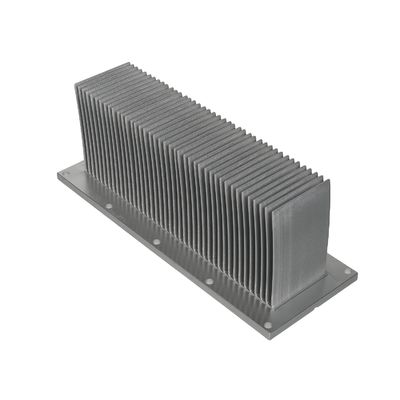
Heat sinks are passive cooling devices that transfer heat from electronic components to the surrounding environment. As device performance advances, heat sinks play an increasingly vital role in maintaining safe operating temperatures. Essentially, they act as thermal "transporters," moving heat from sources to areas where it can dissipate more effectively.
How Heat Sinks Work
Heat sinks operate on convection principles. When components like CPUs or GPUs work, heat transfers through their metal or semiconductor bases to the heat sink. The heat sink's large surface area maximizes contact with surrounding air. As surface temperature rises, nearby air warms, expands, and rises, creating convection currents that carry heat away.
Types of Heat Sinks
Different designs serve various cooling needs:
-
Fin-type:
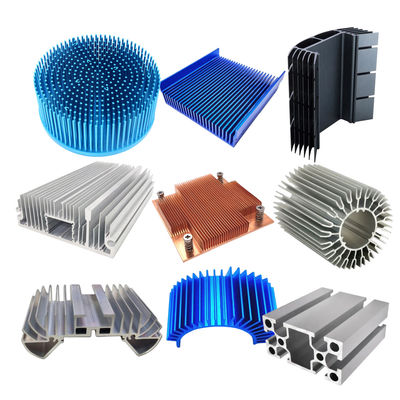
The most common design featuring a base with multiple fins to increase surface area.
-
Pin-type:
Compact designs with numerous small pins for space-constrained applications.
-
Plate-type:
Flat metal plates ideal for high-power applications.
-
Active cooling:
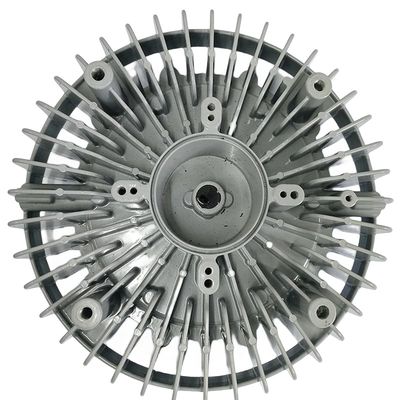
Heat sinks integrated with fans for enhanced performance.
Chapter 3: Heat Transfer Principles
Conduction: The Thermal Relay
Conduction forms the foundation of heat transfer from components to heat sinks. Effective conduction depends on material thermal conductivity and contact quality between components and heat sinks. Materials like copper and aluminum excel in conductivity.
Convection: The Heat Dissipater
Convection transfers heat from sinks to surrounding air through natural or forced airflow. Fin designs maximize surface area to enhance convection efficiency.
Radiation: High-Temperature Supplement
All objects emit electromagnetic radiation proportional to their temperature. While generally minor in electronics cooling, radiation becomes more significant at extremely high temperatures.
Chapter 4: Advanced Heat Sink Design
Materials and Fin Designs
Material selection critically impacts performance:
-
Aluminum:
Lightweight and cost-effective with good conductivity.
-
Copper:
Superior conductivity for high-performance applications.
-
Hybrid designs:
Combine copper bases with aluminum bodies for balanced performance.
Fin configurations significantly affect cooling:
-
Straight fins:
Simple parallel designs for moderate cooling needs.
-
Pin fins:
Cylindrical pins maximizing surface area in compact spaces.
-
Wave fins:
Undulating patterns that enhance air contact.
Heat Pipes and Vapor Chambers
These advanced solutions dramatically improve heat transfer:
-
Heat pipes:
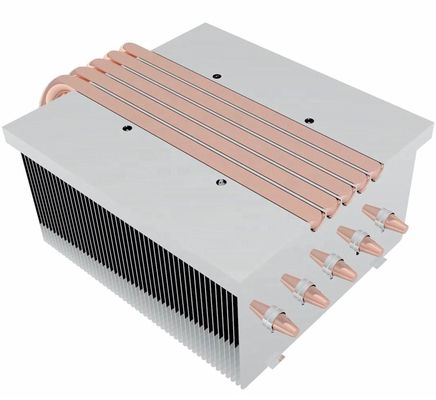
Use phase-change principles for rapid heat transport.
-
Vapor chambers:
Flat heat pipes that distribute heat evenly across larger surfaces.
Chapter 5: Heat Sink Applications
CPU and GPU Cooling
Heat sinks are essential for maintaining processor temperatures in computers and gaming systems. Proper cooling prevents thermal throttling that reduces performance.
LED and Power Electronics
Effective thermal management ensures LED longevity and power electronics reliability by preventing excessive heat buildup.
Chapter 6: Thermal Interface Materials
The Thermal Bridge
Thermal interface materials (TIMs) fill microscopic gaps between components and heat sinks, eliminating insulating air pockets and improving heat transfer. Common types include thermal pastes, pads, and phase-change materials.
Application Best Practices
Proper TIM application requires clean surfaces, appropriate amounts, even spreading, and correct mounting pressure to maximize effectiveness.
Chapter 7: Advanced Cooling Solutions
Liquid Cooling Systems
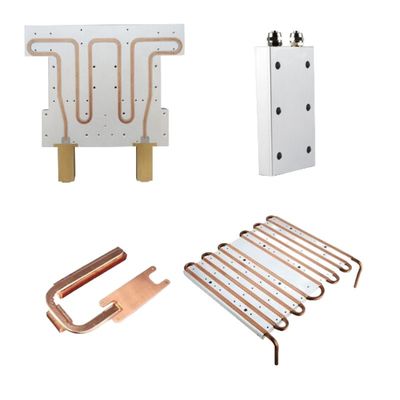
Liquid cooling offers superior thermal performance for high-power applications through circulating coolants that absorb and transport heat more efficiently than air.
Phase-Change Cooling
This cutting-edge technology uses refrigerants or thermoelectric effects to achieve extreme cooling for specialized applications like medical imaging and aerospace systems.
Chapter 8: Overcoming Cooling Challenges
High-Power Electronics
Increasing power densities create significant thermal management challenges requiring innovative solutions like micro-fin heat sinks and embedded cooling.
Compact Devices
Space constraints in modern electronics demand creative cooling approaches such as vapor chambers and graphene-based materials to maintain performance in shrinking form factors.

 Your message must be between 20-3,000 characters!