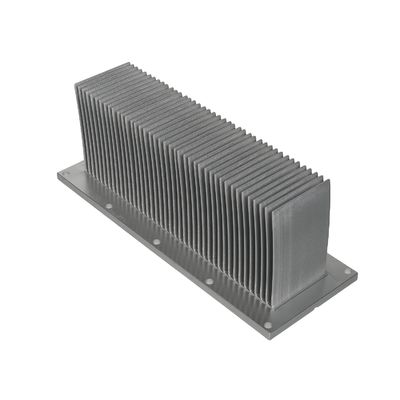
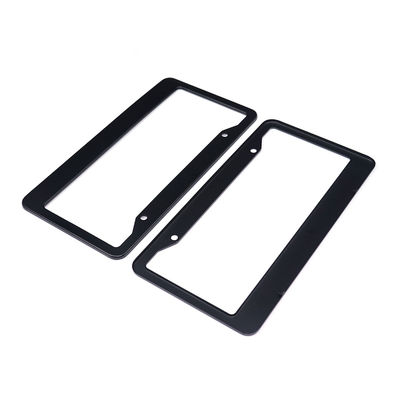
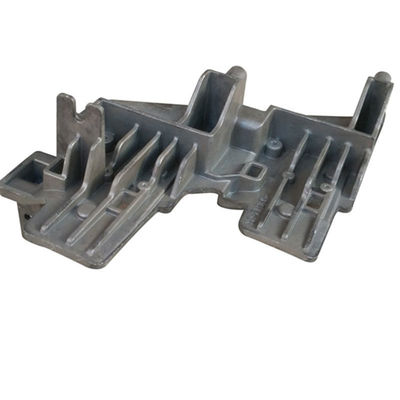
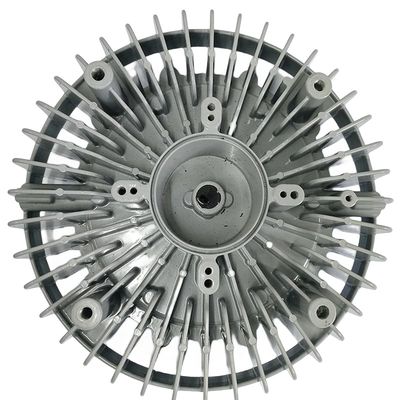
In automotive lightweight design, engineers face a persistent dilemma: how to maintain component strength and stiffness while minimizing weight. Pure aluminum offers lightness but falls short in meeting the mechanical demands of the automotive industry. This is where concepts like "die-cast aluminum" and "aluminum alloys" enter the picture. But does die-cast aluminum alloy truly outperform pure aluminum in strength? The answer is a resounding yes.
Composition and Definition of Die-Cast Aluminum Alloys
Die-cast aluminum alloys refer to aluminum alloys formed through high-pressure die casting—a precision manufacturing process where molten metal is injected into a mold cavity under high pressure and solidifies under controlled conditions. Compared to traditional sand casting or gravity casting methods, die-casting offers superior production efficiency, dimensional accuracy, and surface finish, making it ideal for mass-producing complex, thin-walled components.
These alloys are composite materials created by adding various metallic elements to pure aluminum to enhance casting characteristics, mechanical properties, and corrosion resistance. Common alloying elements include:
-
Silicon (Si): Improves fluidity, lowers melting point, reduces shrinkage, and enhances wear/corrosion resistance.
-
Copper (Cu): Increases strength and hardness at the cost of corrosion resistance, often requiring anodization.
-
Magnesium (Mg): Boosts yield/tensile strength while improving corrosion resistance and weldability.
-
Zinc (Zn): Enhances strength but reduces corrosion resistance, typically used for high-strength applications.
-
Iron (Fe): In controlled amounts, prevents die-sticking during casting but excess amounts reduce ductility.
Mechanical Performance Advantages
Die-cast aluminum alloys demonstrate significant improvements over pure aluminum:
-
Tensile Strength: A380 alloy (330 MPa) vs. pure aluminum (90 MPa)
-
Yield Strength: A380 achieves ~165 MPa
-
Hardness: 80 HB (A380) vs. 20 HB (pure aluminum)
The trade-off comes in reduced elongation due to alloying elements limiting plasticity. Performance remains temperature-sensitive, requiring careful material selection for high-temperature applications.
Manufacturing Process Advantages
The die-casting process itself enhances material properties through:
-
High Pressure: Improves mold-filling capability, reducing porosity and increasing density
-
High Speed: Accelerates solidification, refining grain structure
-
Rapid Cooling: Creates fine-grained, isotropic microstructures with surface hardening
Automotive Applications
The automotive industry increasingly adopts die-cast aluminum alloys for:
-
Engine blocks and transmission housings (weight reduction)
-
Wheels (improved handling and fuel efficiency)
-
Suspension components (enhanced ride quality)
-
Structural body elements (crash safety improvements)
-
EV battery enclosures (thermal management solutions)
Future Development Trends
Key research directions include:
-
Higher-strength formulations through composition optimization
-
Improved heat-resistant alloys for powertrain applications
-
Heat-treatment-free alloys to streamline production
-
Advanced thin-wall casting techniques
-
AI-driven smart manufacturing processes
Material Selection Guidelines
Engineers should evaluate:
-
Mechanical property requirements
-
Environmental corrosion factors
-
Casting complexity considerations
-
Cost-performance balance
-
Post-casting machining needs
Reference standards from AA (Aluminum Association), EN (European), and JIS (Japanese) provide reliable benchmarks, supplemented by consultations with specialized foundries.

 Your message must be between 20-3,000 characters!