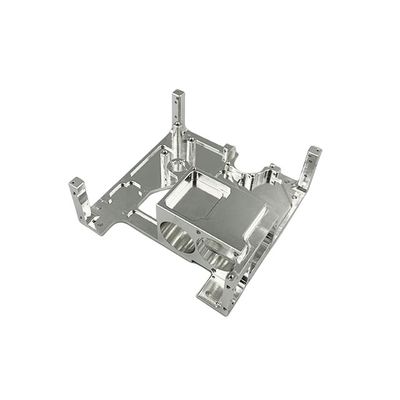
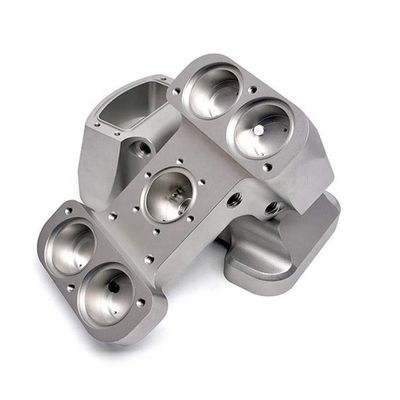
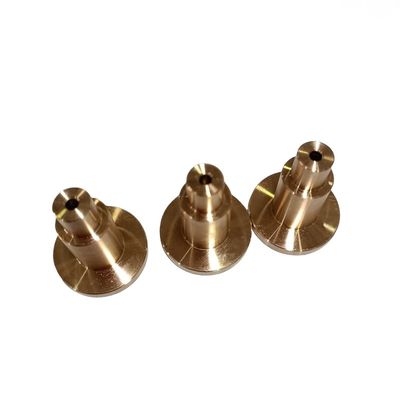
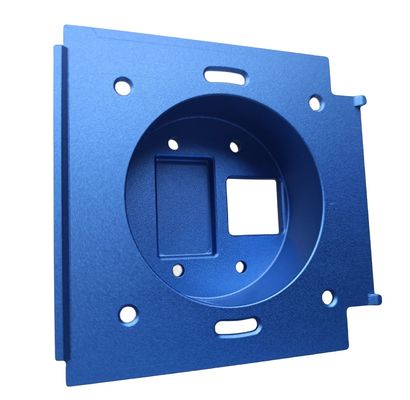
The sleek lines on a car hood or the refined texture of a smartphone case often originate from aluminum casting or die casting processes. While these two metal-forming techniques may appear similar, they exhibit significant differences in material properties, production processes, and final applications. This article explores the distinctions between aluminum casting and die casting to provide comprehensive understanding of these crucial manufacturing methods.
Aluminum Casting: Versatile Forming Techniques
Aluminum casting involves pouring molten aluminum into molds and allowing it to cool and solidify into desired shapes. This category encompasses various casting methods, each suited for different applications and product requirements.
1. Sand Casting
Process:
As one of the most traditional casting methods, sand casting uses molds made from sand mixed with binders and water. After pouring molten aluminum into the sand mold and allowing it to solidify, the sand is removed to reveal the cast part.
Characteristics:
This low-cost, simple process can produce large, complex-shaped parts but typically yields lower precision and rougher surfaces requiring additional machining.
Applications:
Widely used in automotive, machine tool, and heavy machinery industries for components like engine blocks, housings, and large brackets.
2. Gravity Casting
Process:
Molten aluminum is poured into metal molds (typically steel) under gravity's influence.
Characteristics:
Produces dense castings with good mechanical properties and higher production efficiency, though mold costs are higher and complex shapes may be challenging.
Applications:
Common for automotive wheels, engine cylinder heads, and motorcycle frames requiring strength and density.
3. Low-Pressure Casting
Process:
Aluminum is injected into metal molds under low pressure (0.02-0.06MPa).
Characteristics:
Creates dense castings with minimal porosity and excellent mechanical properties, capable of producing thin-walled complex parts, though with lower production efficiency.
Applications:
Used for high-quality components like engine blocks, cylinder heads, and aerospace parts.
4. Investment Casting (Lost-Wax Casting)
Process:
A precision method using wax patterns coated with refractory materials to create molds. After wax removal, molten aluminum fills the cavity.
Characteristics:
Produces highly complex, precise parts with excellent surface finish requiring minimal machining, though with complex processes and higher costs.
Applications:
Ideal for aerospace, medical devices, and precision instruments.
5. Differential Pressure Casting
Process:
Utilizes pressure differentials between mold interior and exterior to fill cavities smoothly.
Characteristics:
Enhances density and mechanical properties while reducing oxidation and gas entrapment.
Applications:
Common in automotive and aerospace industries for high-strength precision components.
6. Ceramic Mold Casting
Process:
Uses high-temperature resistant ceramic molds for casting.
Characteristics:
Produces high-precision parts with excellent surface finish, suitable for small-batch production.
Applications:
Used for art pieces, medical devices, and precision instruments.
7. Plaster Mold Casting
Process:
Employs plaster molds for casting.
Characteristics:
Creates high-precision parts with smooth surfaces, though mold strength limits part size.
Applications:
Common for decorative items, lighting fixtures, and art pieces requiring superior surface quality.
Die Casting: High-Efficiency Precision Forming
Process Overview
The die casting cycle includes mold closing, injection, pressure maintenance, mold opening, and part ejection. Molten aluminum is injected at high speeds (10-100MPa) into the mold cavity, held under pressure during solidification, then ejected as a finished part.
Key Characteristics
-
High efficiency:
Short cycle times enable mass production
-
Precision:
Excellent dimensional accuracy and surface finish
-
Complex geometries:
Capable of thin-walled, intricate designs
-
Mechanical properties:
Good strength though porosity may affect toughness
Applications
Widely used for automotive components (engine blocks, transmission housings), electronic enclosures, and appliance parts.
Aluminum Alloy Designation Systems
Different standards use distinct designation systems for cast and die-cast aluminum alloys:
Chinese GB Standard
-
Cast alloys: "ZL" prefix (e.g., ZL101)
-
Die-cast alloys: "YL" prefix (e.g., YL102)
Japanese JIS Standard
-
Cast alloys: "AC" prefix (e.g., AC4C)
-
Die-cast alloys: "ADC" prefix (e.g., ADC10, ADC12)
American ASTM Standard
-
Cast alloys: "A" prefix with 3-digit numbers
-
Die-cast alloys: Typically numbers above 359 (e.g., A380)
Performance Comparison and Selection Guidelines
Mechanical Properties
Gravity cast alloys generally offer superior strength and toughness due to slower cooling rates creating uniform grain structures. Die-cast parts feature fine grains and high surface hardness but may contain internal porosity affecting overall strength.
Machinability
Cast aluminum alloys typically machine more easily due to lower hardness. Die-cast parts require caution during machining to avoid cracking from internal porosity.
Surface Treatment
Cast aluminum responds well to anodizing for corrosion resistance and decorative finishes. Die-cast aluminum's composition makes anodizing more challenging but better suited for plating applications.
Application Selection
-
High-strength applications:
Engine blocks, aerospace structures (casting preferred)
-
Precision components:
Electronic housings, appliance parts (die casting preferred)
-
Decorative finishes:
Architectural elements, lighting fixtures (cast with anodizing)
Conclusion
Aluminum casting and die casting represent two fundamental aluminum forming processes, each with distinct advantages. The optimal choice depends on specific requirements including part geometry, dimensional precision, mechanical properties, surface treatment needs, and production volumes. Understanding these differences enables engineers and designers to make informed material and process selections, optimizing product performance while controlling costs.

 Your message must be between 20-3,000 characters!